Shelf
Redesigning reading as a collective habit.
- Year
- 2026
- Role
- Product Designer
- Tools
- Figma
- Status
- Complete
- Team
- André CarvalhoJuliana KuniyoshiManuella AraujoVinicius RochaYago Sanderson
Overview
Shelf is a reading app designed to encourage people to read more and stay connected to others while doing it. Users can track their books, discover new titles, and join reading groups.
Developed in the Digital Product Design course at Aprender Design, by a team of five designers. Our starting point was a concerning reality:
53%
of Brazilians hadn’t read even part of a book in the three months before a national survey: the first time non-readers became the majority.
What if reading felt less like a personal achievement and more like something you do together?
My role
One of five designers. I worked on the research phase (competitive analysis, synthetic persona interviews via AI, and user flows) and contributed to ideation and design, with focus on the Invite, Club Profile and Current Reading screens, plus the Recap explorations.
Mapping the market
Before talking to readers, we mapped the apps they already use: where each one sits between social and individual reading, and between discovery and organization.
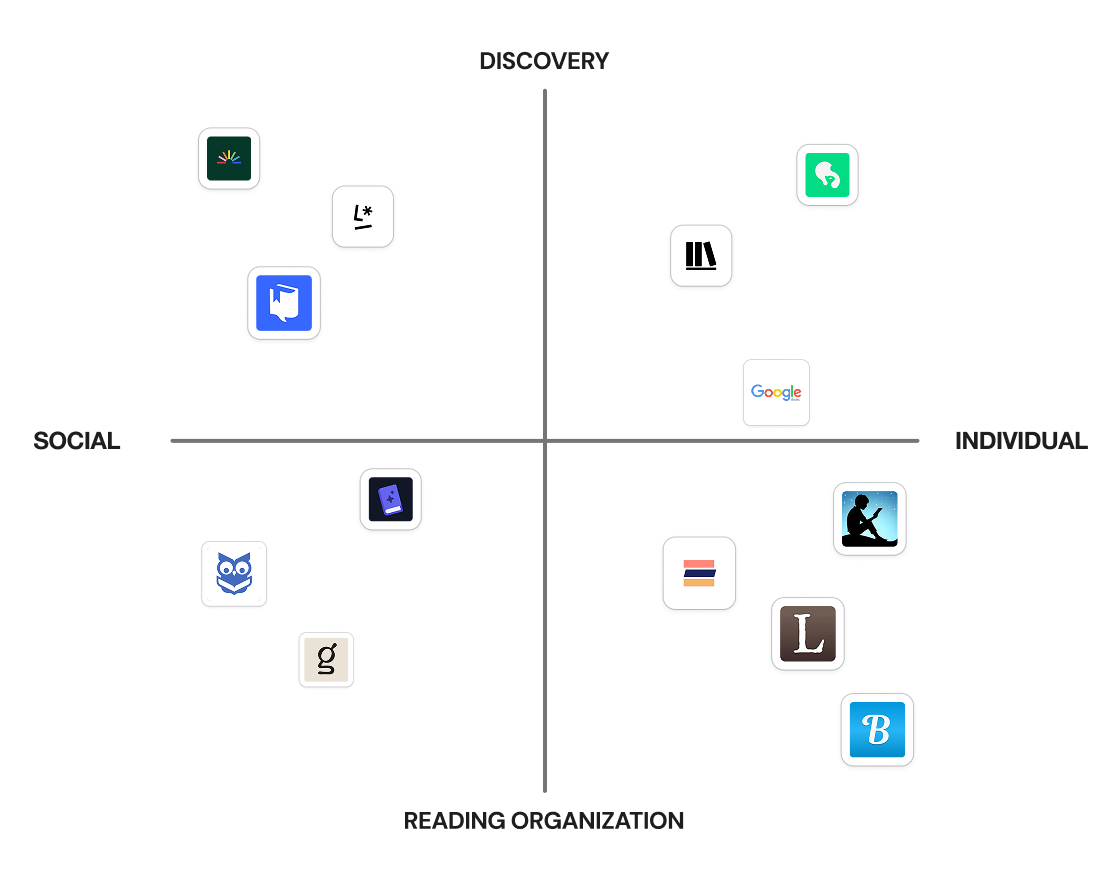
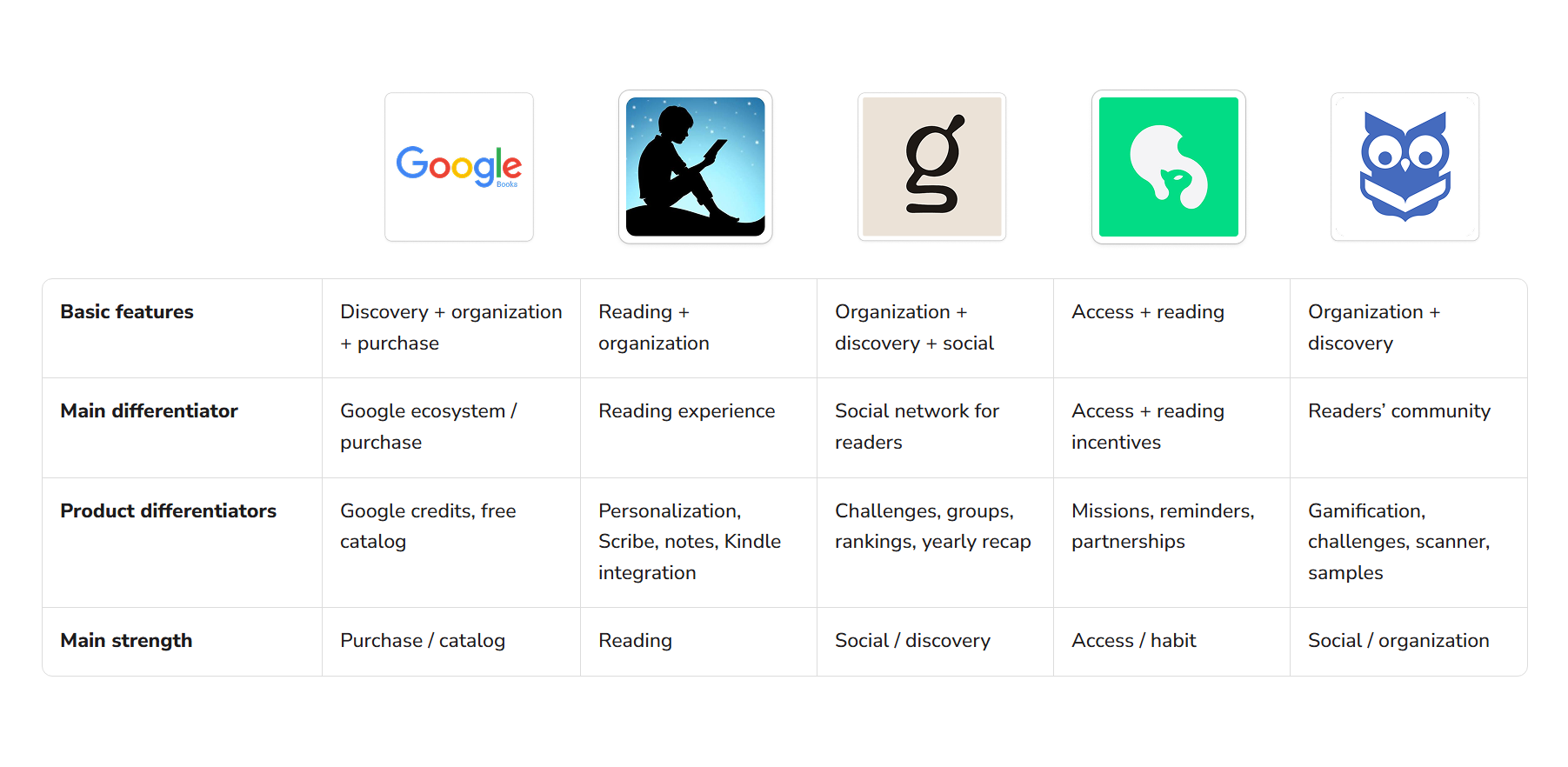
Mapping the competitive landscape: where reading apps stand on social engagement and content organization.
Who reads and who gave up
Using real interview data provided by the course, we built synthetic personas representing three distinct reader profiles. We then simulated conversations with these personas using AI to explore hypotheses, challenge assumptions and identify potential design directions.
- Pattern
Community works as audience, not conversation
One of the patterns that emerged across the interviews.
- Split
“Strava for reading”
The concept split reactions sharply: motivating for some, anxiety-inducing for others.
Reading in groups with light structure increases reading frequency without increasing anxiety.
Design
If community already exists as a latent motivator, but the tools end up being used to perform, not to connect, Shelf could turn reading into a collective experience without turning it into competition.
- 01
The invitation
The entry point is an invitation. A notification, a splash, a book cover, a club to join. The color comes from the book’s cover, so every invitation carries the mood of the book.
- 02
Current Reading
The core. Progress tracking, calendar sync, discussion threads and page marking, all tied to a specific book a specific group is reading together. The individual experience and the collective one live in the same screen.
- 03
Discussion Rooms
Discussion Rooms turn passive reading into active exchange. Highlights become conversation starters. A quote from the book becomes a thread. The community stops being a stage and starts being a room.
- 04
The club updates
Once you mark the book as finished, your club page changes to show the event the club created to close it, like a meetup, so you can add it to your calendar. The group’s plans live where the reading does.
- 05
The Recap
The most experimental part. We explored Spotify Wrapped-style storytelling before landing on a version that felt personal without feeling performative.
- 06
Everything the group lived together
Each number became an analogy, so the recap felt like a story instead of a report.Hours in call: as long as a flight from São Paulo to Munich.Messages: enough to fill an entire book.Books stacked: as tall as a guitar.
Result
Shelf ended as a fully designed prototype, from the entry flow to the Recap, with a clear point of view: reading clubs, not tracking apps. It showed that a social reading experience can feel light and personal without relying on gamification or performance metrics.
Reflection
Using AI to simulate user interviews opened up a new way of thinking about where the tool fits in research: not as a replacement for real conversations, but as a way to stress-test assumptions early, before jumping to solutions. And only as good as the questions you bring to it.
If I were to continue, I’d test the hypothesis with actual reading groups, not to validate the design, but to see whether the structure holds when real people bring real books and real schedules into it.